
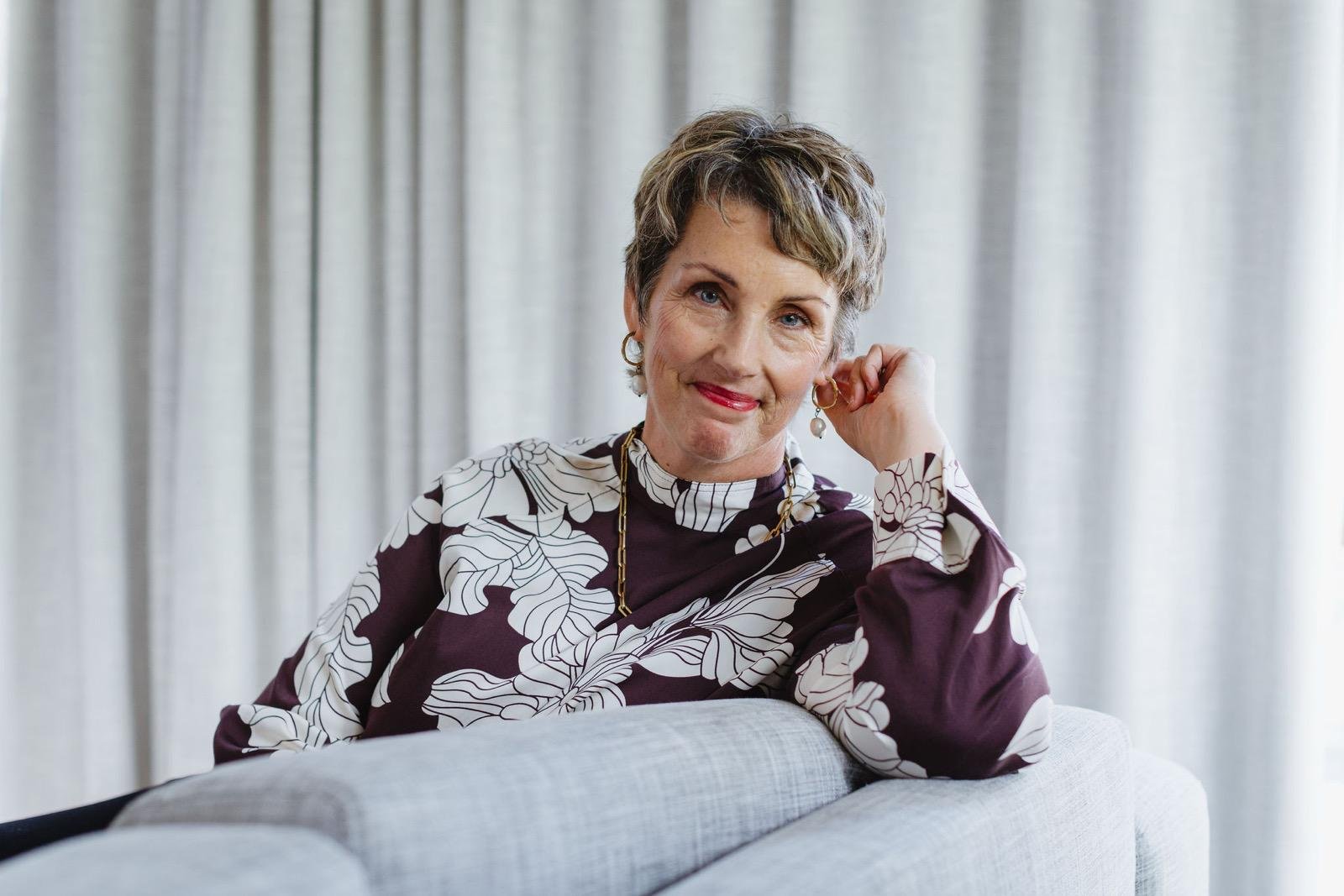
About Heather
I’ve spent thirty years beside women at turning points.
My work with women began in 1994, in a complementary healing organisation for people with life-challenging illness, and then with women’s health and violence prevention community organisations. Then I trained as a nurse and emigrated to Dunedin in 2004 to train as a midwife in Aotearoa.
I have been privileged to being at the side of hundreds of women giving birth, and later to lead midwifery services as Director of Midwifery.
Along the way I learned that every big transition asks for courage and kindness. Most of us were taught plenty about pushing through. Far fewer of us were taught to be kind to ourselves while we do it.
Lovingkindness teachings have been part of my personal practice since I first encountered Sharon Salzberg’s teaching in the early 90s. They have reshaped my relationship with myself, and given me an inner sense of okayness.
I named BRAVEKind for the two halves of compassion. The kind half is soft: dropping the judgment long enough to tell yourself the truth. The brave half is fierce: finding the courage to act on what you know.
Those two halves pulled me through my own big turning point. The end of a marriage, a career that didn’t fit anymore, mothering an adult instead of a child, finding a new home, making friends with a changing body: a lot shifted for me. Kindness and courage brought me home to myself, and to a sense that this could be the best chapter yet.
How I work, and why
Most of us learned a map for happiness: get the right body, relationships, role, house and routine, and happiness will follow — and stay. It doesn’t fit our experience, and it doesn’t fit the research. Chasing a feeling tends to push it further away.
If there is one thing that connects us all as humans, it’s this: life is uncertain, changeable, and full of little and big tender and sad moments.
What if we turn instead to cultivating, and appreciating, a life with joy and meaning in it? That comes from where you put your attention, how you connect with others, how you speak to yourself, and whether your days serve what you value. All of these can be learned, and none of them depend on life going smoothly.
-
Positive psychology researcher Martin Seligman identified five building blocks of a flourishing life.
Positive emotion. Warmth, contentment, gratitude and joy. These emotions don’t just feel good in the moment. They widen our attention and build lasting resources like resilience and connection. And they don’t just happen to us. We can learn them.
Engagement. Being absorbed in what you’re doing. Losing yourself in something that uses the best of you. You may have heard this is called “flow”. When you know your strengths and spend more time on activities that use them, you get more flow.
Meaning. Belonging to something larger than yourself. Knowing your days serve something you value. Big transitions can bring a loss of meaning as our roles change, whether in motherhood, our work or our community. Finding a renewed sense of purpose can be a big part of a joyful new chapter.
Accomplishment. Working toward things that matter to you, and getting there on your own terms and for your own reasons. Perfectionism can stop us appreciating the progress we’re making, and shrink our sense of accomplishment. Appreciation is the antidote.
-
Kristin Neff’s research on self-compassion shows that kindness toward ourselves works better than self-criticism for motivation, resilience and follow-through. That means being soft when we need soothing, and firm when we need to act.
I’ve followed Sharon Salzberg’s lovingkindness teachings for thirty years. This practice has reshaped my relationship with myself. It has given me a sense of inner okayness that makes more room for joy, engagement, mutual relationships and meaning, and for appreciating what I’ve achieved.
-
It seems counterintuitive, but the harder we try to avoid difficult feelings like guilt, anxiety, grief, boredom and anger, the more they grow. Avoidance is exhausting. It shrinks our lives, and doesn’t work.
Steven Hayes and colleagues developed an alternative called Acceptance and Commitment Therapy (ACT). Drop the struggle. Let the feeling be there. Being kind to yourself in that moment helps.
Decades of trials show that people who practise this consistently report more meaning and vitality.
Dropping the struggle also frees us to choose how we act. We stop saying yes out of guilt when we mean no. We stop avoiding friction, and voice it instead, which makes resolution possible. We stop answering uncertainty with a quest for control.
As Russ Harris writes in The Happiness Trap, ACT changes the goal. Rather than chasing good feelings, you build a rich, full and meaningful life, living by your values and bringing all of you along for the ride.
-
For a long time, mental and physical health were studied separately. Even now, it is rare to find a practitioner who can support both at once. That’s one of the things I love about coaching.
The findings are clear: how we sleep, move and eat shape how we feel and think. And how we feel and think affects our immune system, nervous system, heart and experience of pain. Our whole body works as one.
Sleep is a good example. Matthew Walker’s research shows that even one short night increases emotional reactivity and makes it harder to regular ourselves. Every parent of a newborn knows this! Poor sleep over time is strongly linked to low mood and poor health, and anxiety and depression both disrupt sleep.
Movement helps too. In many trials, exercise, including walking, works about as well as talk therapy or medication for mild to moderate depression. It works the other way as well: low mood and a difficult relationship with our body can make it harder to get moving.
A fast growing area of research is metabolic and nutritional psychiatry, which looks at how what we eat affects our mental state. Blood sugar swings affect mood and concentration, and chronic inflammation from poor nutrition is linked to depression and anxiety. If you don’t know Julia Rucklidge’s research, it’s worth a look.
I trained in Metabolic and Nutrition coaching as well as Advanced Mental Health Coaching, because you can’t coach a woman’s mind while ignoring the body she lives in.
-
So how do we work with what’s happening inside us?
Jon Kabat-Zinn’s work shows that training our attention on what we’re experiencing, in our bodies and in this moment, reduces stress and rumination, helps us regulate emotion, and supports our wellbeing. It doesn’t remove difficulty. It stops us from adding to it.
Our emotions are the story we tell from the signals we are receiving from our bodies. Being more aware of those signals helps us to get better at regulating our emotions, make decisions, and know what we want. When we are overwhelmed, we often lose touch with our bodies, and with that vital information.
This is what embodiment means in practice: listening and responding to your body, instead of treating it as something to manage and control. It means you can use the messages your body sends: your stomach dropping, the hair raising on the back of your neck, the longing in your chest, the unease in your gut.
“A down to earth, scientifically backed and personal way of coaching. In her presence you feel like change is just one step away.”
— Miranda, New Zealand
Training and experience
30+ years in women’s health: 20 as a midwife and nurse, and 10 in women’s health advocacy (violence prevention, reproductive health, complementary healing)
Former Director of Midwifery
PREKURE certified Master Coach: Advanced Mental Health, Metabolic and Nutrition, and Health Coaching
Additional training in ACT and CBT tools for coaches, and The Map of Meaning
Mindful self-compassion training
Tertiary study in developmental psychology, feminist studies, and peace and conflict studies
Let’s start with a conversation
A free 15-minute chat to see whether we’re a good fit. No pressure, and no preparation needed.